Pattern Scope Writing

Writing on external review, governance, and provider signals.

Independent, public-source writing for decision-makers who need clearer framing, stronger scrutiny, and more usable pattern recognition across governance, visibility, and reputational risk.

Device alerts

Follow new writing on this device.

Enable push notifications for new Pattern Scope writing. On iPhone or iPad, add the site to the Home Screen first, then allow notifications.

No inbox clutter. This browser or installed web app becomes the endpoint.

Search archive

Search by title or summary, then narrow the archive with the browse paths below.

Browse archive

Move through the archive by category when you want a broader sweep first.

Filter by path

Open one path at a time to refine by role, issue, type, or current focus.

Featured

A small editorial front page for the pieces carrying the strongest framing weight right now.

Good CQC Rating, Worse Public Reviews: What Should a Board Do?
Featured 12/04/2026
Practical Explainers Featured analysis

Good CQC Rating, Worse Public Reviews: What Should a Board Do?

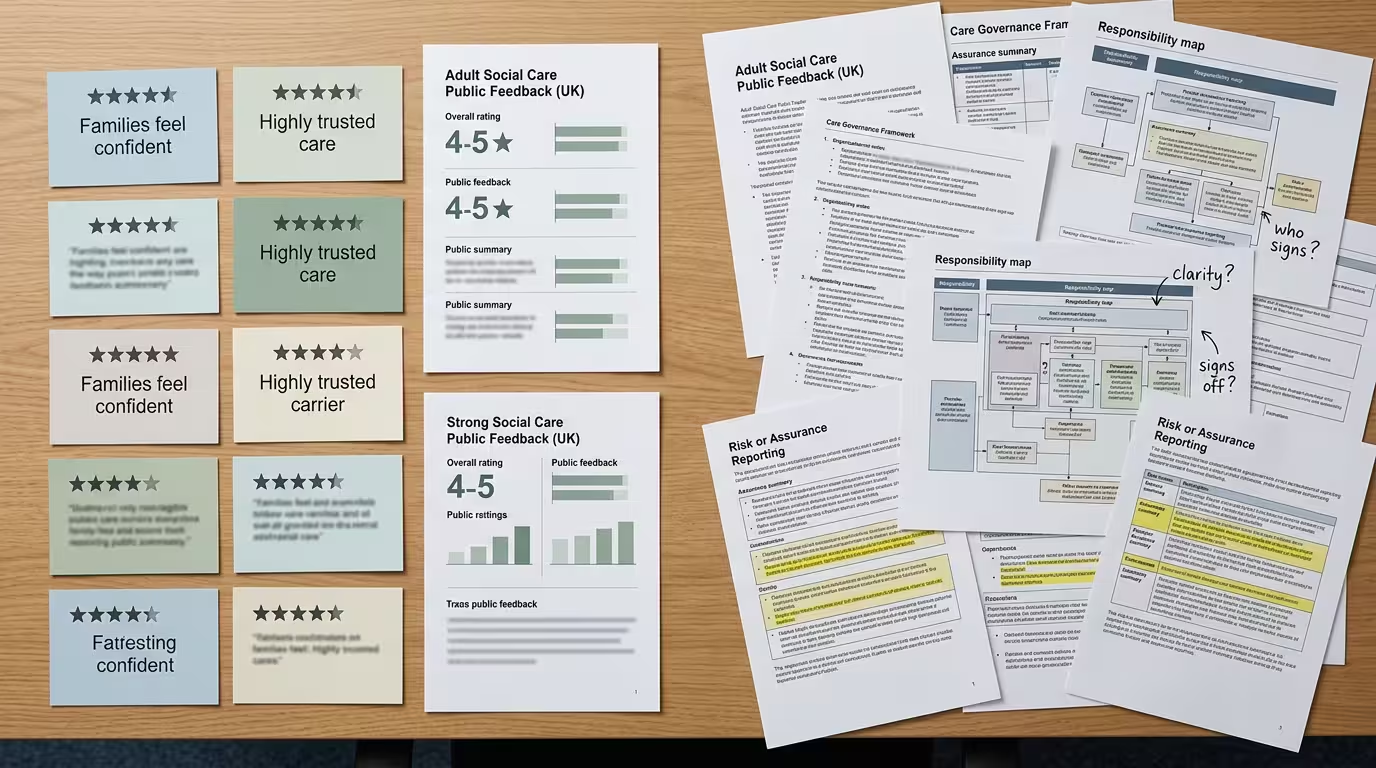
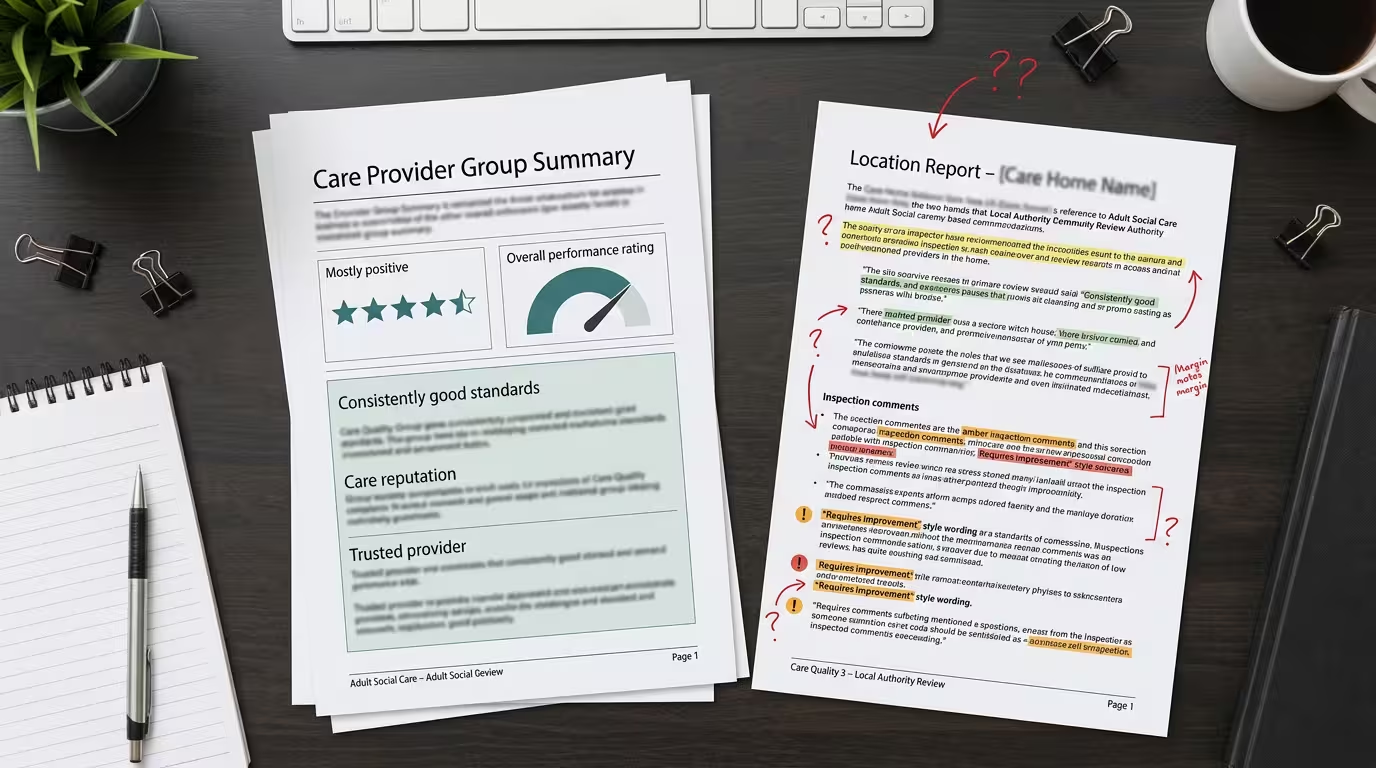
A Good CQC rating alongside worsening public reviews does not prove that one side is right and the other is wrong. It creates a governance reading problem. This article explains what each signal can show, what neither can settle alone, and how boards can respond without drifting into false reassurance or overreaction.

When Does a Care Provider Need an External Governance Review?
Featured 10/04/2026
Practical Explainers Editorial feature

When Does a Care Provider Need an External Governance Review?

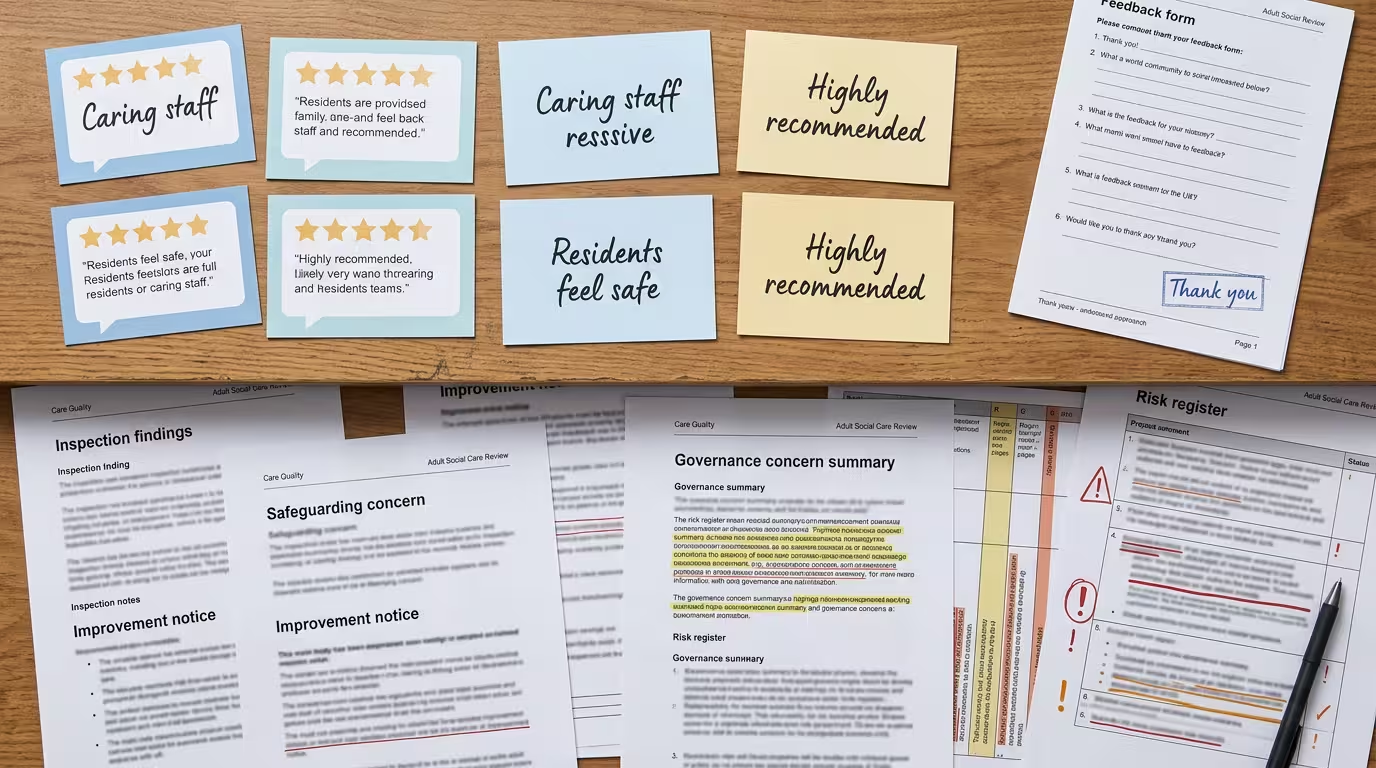
An external governance review can help when the public picture around a care provider has become harder to read clearly, but it is not a formal audit, not regulatory replacement, and not proof on its own. This article sets out when a public-information review is genuinely useful, what it can help leadership see, and what it cannot settle by itself.

How to Compare Care Providers Before a Shortlist Decision
Featured 08/04/2026
Practical Explainers Editorial feature

How to Compare Care Providers Before a Shortlist Decision

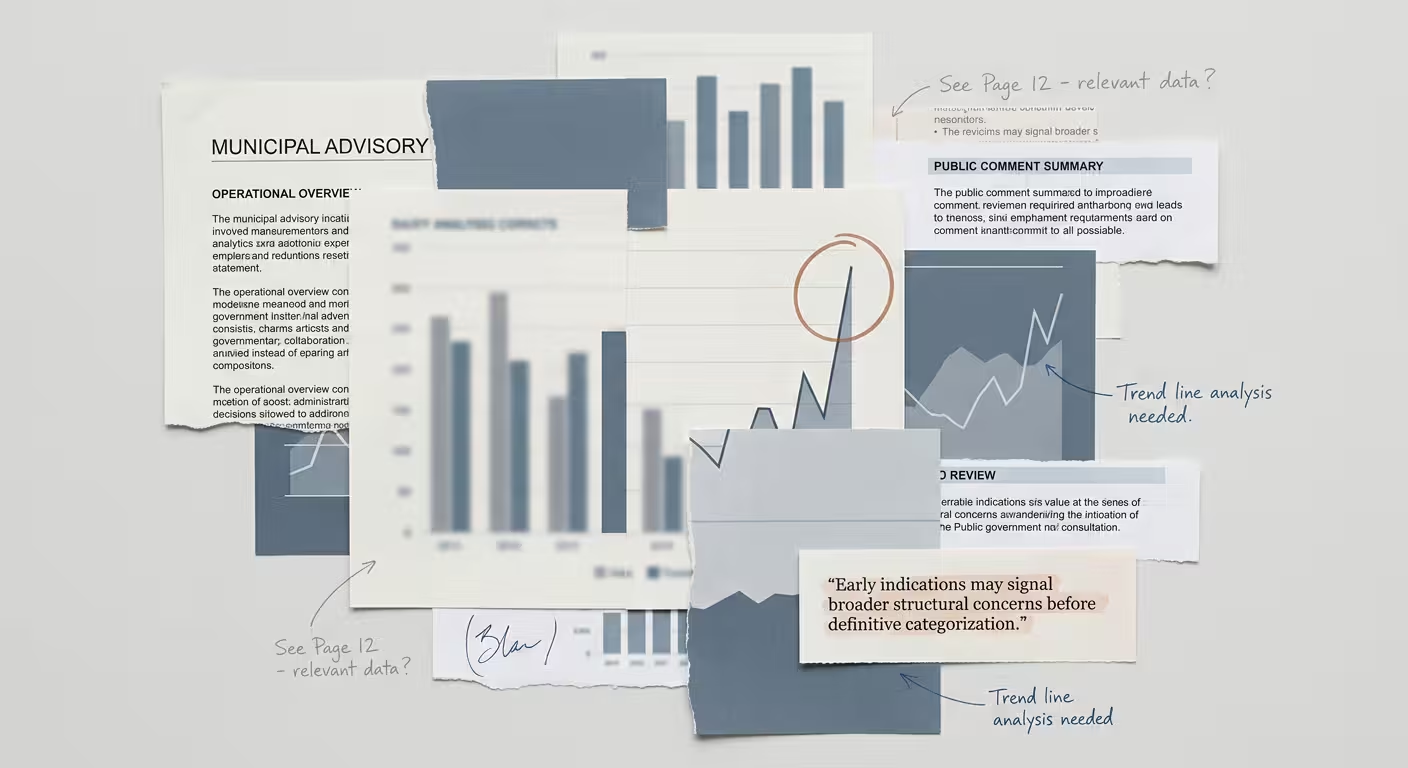
Comparing care providers before a shortlist decision is not about building a consumer style league table. It is about using public information to read which provider presents the clearer, steadier, and more coherent external picture for the decision in front of leadership. Start with the sections on what public information can help with, what it cannot prove on its own, and the practical comparison frame.

Archive

All writing

Showing all 18 articles

How should care providers interpret the gap between CQC findings and public reviews?
02/04/2026
Risk Interpretation

How should care providers interpret the gap between CQC findings and public reviews?

For many providers, CQC reports and public online reviews do not tell the same story. This article helps you treat that gap as a leadership and governance question, not just a reputation issue. It is worth paying particular attention to the parts where the text separates what the sources are saying from the cautious conclusions that can reasonably be drawn.

When is a Signal Snapshot enough, and when do you need a Deep Snapshot?
30/03/2026
Practical Explainers

When is a Signal Snapshot enough, and when do you need a Deep Snapshot?

Not every situation needs the same depth of external written review. This page helps you decide whether a focused Signal Snapshot is enough for your current question, or whether a connected Deep Snapshot is more appropriate. Pay particular attention to the sections that match your reality: one unit, several locations, or a board-level governance question.

When repeated warning fails to become protection
27/03/2026
Signal Reading

When repeated warning fails to become protection

St Andrew’s Northampton is no longer only a story about abuse allegations inside one institution. It is also a case study in how repeated warning, weak assurance, leadership instability, and delayed escalation can fail to protect highly vulnerable patients in time. If you want the most practical sections first, start with Why this does not look like sudden collapse, Why this matters in specialist settings, and What this case reveals about escalation architecture.

What strong public narrative can hide from boards and senior teams
26/03/2026
Risk Interpretation

What strong public narrative can hide from boards and senior teams

A strong public narrative can help a provider look stable, thoughtful, and credible from the outside. But it can also make it harder to see where the wider public picture has become less clear, less even, or more dependent on reassurance than evidence. If you want the most practical sections first, start with What strong public narrative can do, What it can hide, and Why this matters for board visibility.

Public trust and governance clarity are not the same thing
19/03/2026
Governance Patterns

Public trust and governance clarity are not the same thing

A provider can be trusted, well liked, and publicly reassuring while still presenting a governance picture that is harder to read clearly from the outside. That does not make the trust false. It means trust and governance clarity describe different things. If you want the most practical sections first, start with What public trust can show, What governance clarity means, and Why the distinction matters for leadership.

Why accountability can blur in multi-entity provider groups
15/03/2026
Governance Patterns

Why accountability can blur in multi-entity provider groups

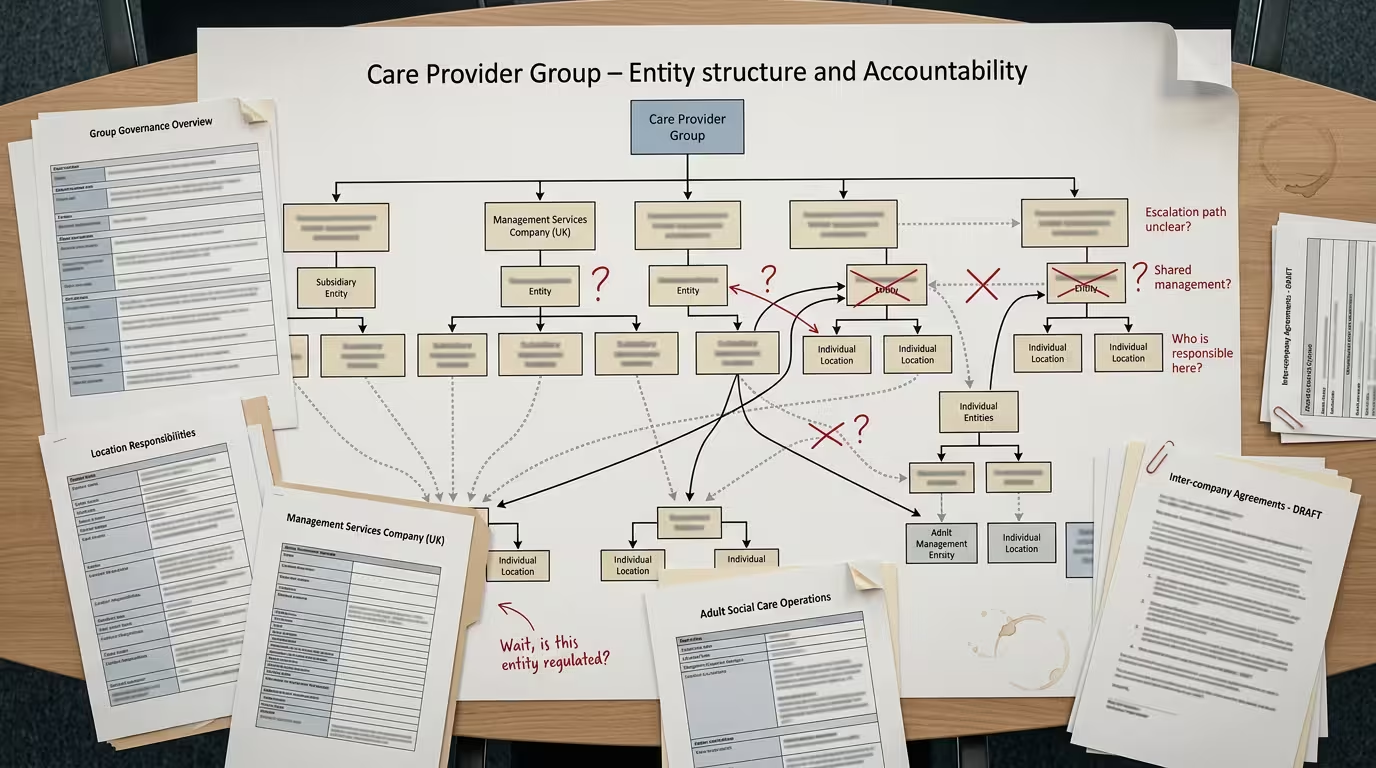
A multi-entity provider group can look coherent from the outside while responsibility inside the visible structure is harder to read. That does not automatically mean accountability is weak, but it can mean the public picture is less clear than the wider organisation appears. If you want the most practical sections first, start with How accountability blur develops, What it can signal, and Why visibility matters for oversight.

Why one troubled location can hide behind a strong group reputation
12/03/2026
Governance Patterns

Why one troubled location can hide behind a strong group reputation

A provider group can be well regarded in public while one location carries a more uneven visible picture. That does not automatically mean the wider group is weak. It means group reputation can sometimes smooth over local variation that deserves closer attention. If you want the most practical sections first, start with How group reputation can mask local difference, What one troubled location can signal, and Why this matters for oversight.

The reputation-risk gap in care providers
08/03/2026
Governance Patterns

The reputation-risk gap in care providers

A provider can look trusted, stable, and well regarded in public while still showing a more mixed risk picture underneath. That does not mean the reputation is false. It means reputation and risk are not the same thing. If you want the most practical sections first, start with What the reputation-risk gap is, How it develops, and Why it matters for leadership.

How to read the gap between CQC findings and public reputation
05/03/2026
Risk Interpretation

How to read the gap between CQC findings and public reputation

A provider can appear well regarded in public while still showing a more mixed regulatory picture. That does not automatically mean the reputation is false or the findings tell the whole story. It means the two should be read together, not as if one cancels the other out. If you want the most practical sections first, start with Why the gap happens, What each side can show, and How to read the difference without oversimplifying it.

When one location starts to drift from the wider provider narrative
01/03/2026
Governance Patterns

When one location starts to drift from the wider provider narrative

A provider can have a strong overall narrative and still show visible unevenness at location level. That does not always mean serious failure, but it can mean the public picture is becoming less coherent than the wider brand suggests. If you want the most practical sections first, start with How drift becomes visible, What location-level unevenness can signal, and Why this matters earlier than it may first appear.

What leadership changes may signal from the outside
25/02/2026
Signal Reading

What leadership changes may signal from the outside

Leadership changes can attract attention quickly, especially when they become visible in the public footprint around a provider. Sometimes they mean very little on their own. Sometimes they sit within a wider pattern that deserves closer reading. If you want the most practical sections first, start with What leadership changes can signal, What they cannot tell you, and How to read them in context.

5 situations where an outside-in review is genuinely useful
22/02/2026
Signal Reading

5 situations where an outside-in review is genuinely useful

An outside-in review is not useful in every situation. Its value is clearest when leaders need a more structured reading of visible public signals, but do not yet need a full internal investigation. If you want the most practical sections first, go straight to the five situations and the closing section on when this kind of review is the right fit.

How public information can support earlier governance attention
18/02/2026
Signal Reading

How public information can support earlier governance attention

Public information cannot tell leaders everything about what is happening inside an organisation. But it can help draw attention to visible patterns, misalignment, or uncertainty earlier than internal discussion sometimes does. If you want the most practical sections first, start with What public information can do, Why earlier attention matters, and How to use it without overstating it.

When a Signal Snapshot is enough, and when it is not
15/02/2026
Signal Reading

When a Signal Snapshot is enough, and when it is not

A Signal Snapshot can be a useful starting point when the aim is to get a clearer outside-in reading of visible public signals. But not every question can or should be answered at that level. If you want the most practical sections first, start with What a Signal Snapshot is designed to do, When it is enough, and When a deeper review is the better choice.

How to use external signals without over-interpreting them
11/02/2026
Practical Explainers

How to use external signals without over-interpreting them

External signals are useful, but only if they are read with discipline. A public signal can point to tension, drift, or uncertainty without proving the full internal picture. If you want the most practical sections first, start with What external signals are good for, Where over-interpretation begins, and How to read signals in proportion.

What public signals can reveal before a problem becomes obvious internally
07/02/2026
Signal Reading

What public signals can reveal before a problem becomes obvious internally

Public signals do not tell you everything. They are partial, uneven, and sometimes ambiguous. But they can still reveal early patterns before an organisation has fully named the issue internally. If you want the most practical sections first, start with What counts as a public signal, What public signals can reveal, and Why early visibility matters.

Why positive reviews do not always mean low risk
04/02/2026
Signal Reading

Why positive reviews do not always mean low risk

Positive reviews and appreciative family feedback matter. They can signal trust, warmth, and a good day to day experience. But public praise is not the same as a full governance or risk picture. If you want the most practical sections first, start with What positive reviews can show, What they can miss, and What to read alongside them.

What an outside-in review is for care providers, and what it is not
01/02/2026
Practical Explainers

What an outside-in review is for care providers, and what it is not

An outside-in review is a structured reading of public information about a care provider. It is not an inspection, not legal advice, and not an internal audit. Its value lies in helping leaders see how public signals, visible patterns, and unanswered questions may look from outside the organisation. If you want the most practical sections first, start with what an outside-in review is, what it is not, and when it is most useful.