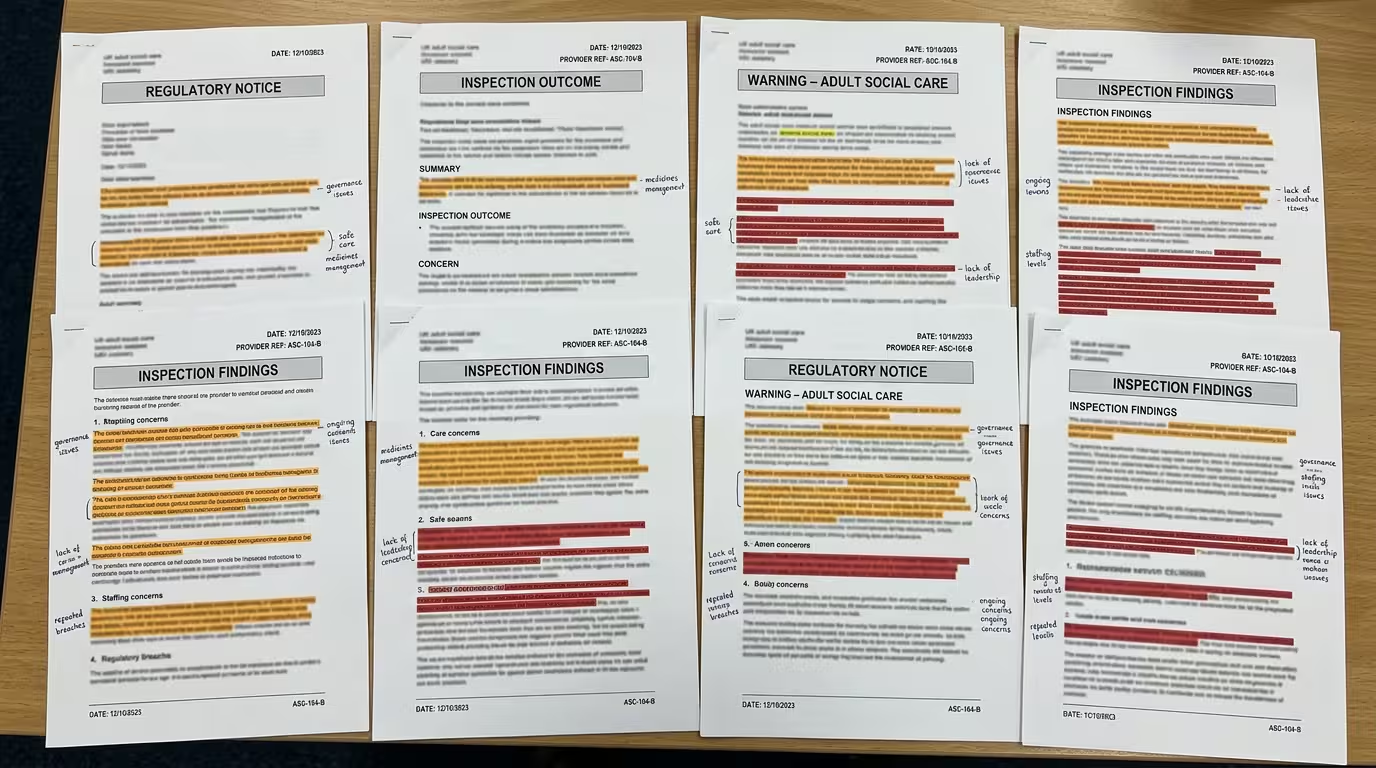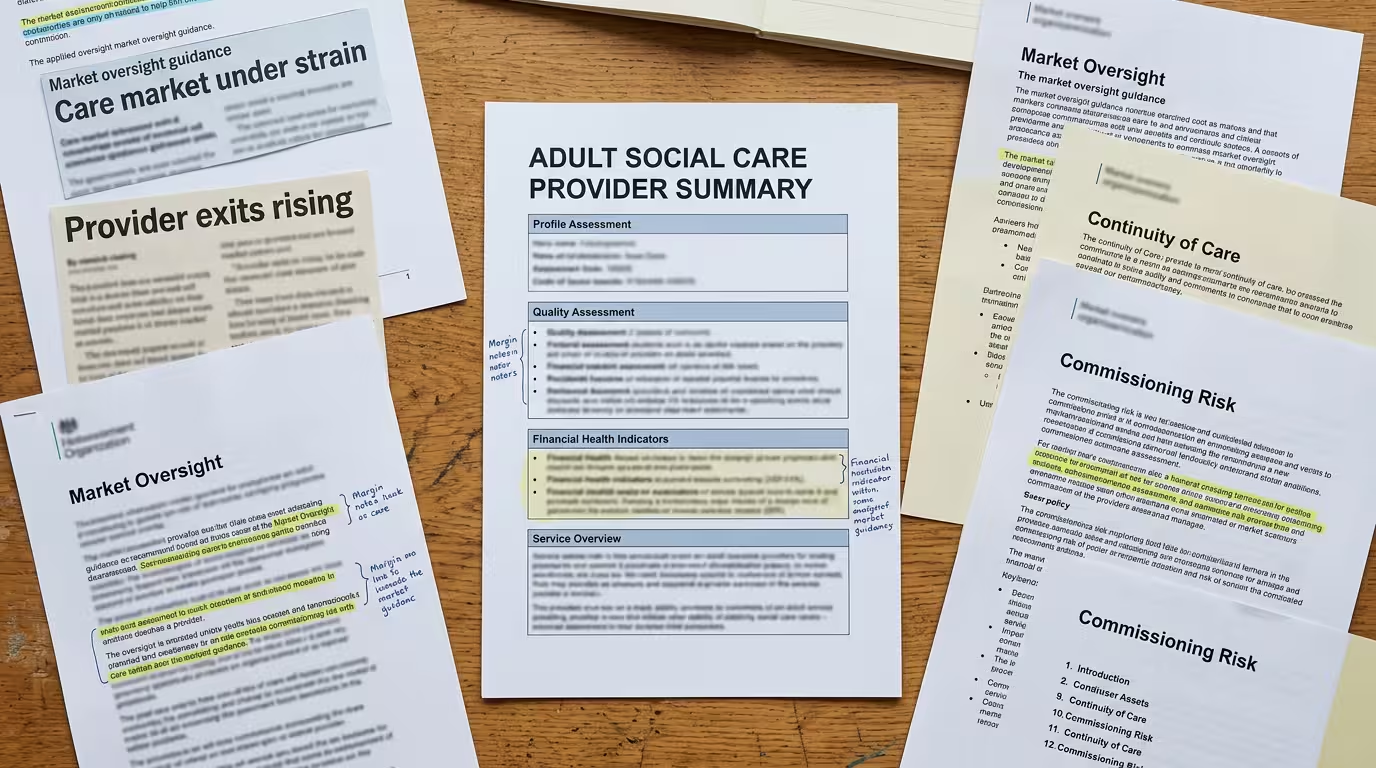
Providers are usually read one organisation at a time. That makes sense. Families, partners, local stakeholders, and boards often begin with the service itself: its public narrative, its visible reputation, its leadership picture, its inspection history, and the wider signals surrounding its footprint. But there are moments when that provider-level reading becomes too narrow.
Adult social care in England is currently one of those moments. Not because every provider is unstable, and not because market pressure tells you everything about any one organisation. It does not. But when the wider care environment is visibly strained enough, market stability itself becomes part of the provider signal. The question is no longer only whether one provider looks reassuring on its own terms. It is whether that reassurance is being read against a backdrop that has become materially harder to ignore.
What market stability does and does not tell you
Market stability is not a proxy for provider failure. A strained sector does not mean one service is about to collapse. The CQC is explicit on this point. Its Market Oversight scheme is designed to assess the financial sustainability of “difficult to replace” providers and to give local authorities advance notice if failure becomes likely, so that continuity-of-care plans can be prepared. It also states clearly that being in the scheme is not itself an indication of risk, and that the scheme is not intended to prevent business failure or monitor the entire sector as a whole.
That distinction matters. It means market context should not be used lazily. It does not tell you that one provider is unsafe simply because the sector is under pressure. What it does tell you is that provider reassurance should not be read in isolation when the surrounding market is visibly carrying continuity, workforce, cost, and sustainability strain.
Why the backdrop now matters more
The backdrop matters more when institutions begin speaking about continuity risk more openly. In its updated guidance, the CQC stresses that uncertainty over whether a provider can carry on is extremely distressing for people who use services and for families and carers, and that the scheme exists to provide advance warning where likely failure may lead to service cessation. That is not just technical regulation. It is a public acknowledgment that market fragility can have direct human consequences in care.
That context has become harder to dismiss in recent weeks. On 5 March, Care England said the Spring Statement had offered “little reassurance” to adult social care providers and warned that cost and workforce pressures were continuing to increase sector instability. Around the same time, Louise Casey described England’s adult social care system as facing a “moment of reckoning”, characterising it as underpowered, confusing, and heavily dependent on patchwork fixes.
None of that proves that a specific provider is unstable. But it does change the climate in which provider-level reassurance is read. A stable-looking service inside a visibly pressured system needs a different kind of reading from a stable-looking service inside a calmer one.
Why this changes the outside-in reading
When the surrounding market is under visible strain, some provider signals start carrying different weight. The same public reassurance can mean something slightly different depending on the context around it.
A strong public narrative, positive reviews, stable local trust, or even a relatively settled outward footprint may still be meaningful. But they now sit within a sector where continuity, replacement difficulty, and structural fragility are being discussed more openly by regulators and sector leaders. That means outside-in reading has to widen its lens. It is no longer enough to ask only, “Does this provider look reassuring?” A better question is, “How should this provider’s reassurance be read in a market that is visibly under more pressure?”
What this may signal at provider level
Once market stability becomes part of the reading, provider-level signals can take on added significance. A service may still appear strong, but visible weaknesses can matter more when the surrounding system is less forgiving.
That may include questions such as:
- does the provider’s public reassurance look resilient, or merely calm on the surface?
- are continuity and leadership signals strong enough to withstand wider market pressure?
- does the organisation look legible and governable enough in a context where replacement and disruption would be more costly?
- are there visible signs that the provider’s public story is doing more reassurance work than the wider evidence around it can comfortably support?
These are not crisis questions. They are context questions. The point is not to dramatise provider risk, but to recognise that public reassurance becomes more conditional when the wider market looks less structurally settled.
Why continuity risk matters so much in care
Continuity risk is different in adult social care from many other sectors because the consequences of failure are not mainly commercial. They are lived. The CQC guidance makes this explicit: service disruption can cause severe distress and real risks to people’s health and wellbeing, while also creating anxiety for families and carers. That is why market instability matters even before any one provider reaches formal failure.
Once the wider system is visibly strained, provider stability is no longer just a question of organisational performance. It becomes part of a more fragile continuity environment. That makes outside-in reading more important, not less, because boards and senior teams need to understand whether the provider’s visible public footprint still supports confidence under tougher conditions.
How to read this without turning it into sector panic
A careful reading should resist two bad habits. The first is complacency, where wider market strain is treated as distant background noise with no interpretive relevance. The second is panic, where every provider is read as if sector pressure automatically implies imminent failure.
The better reading sits between those extremes. It recognises that market context matters, but only when held in proportion. It should sharpen interpretation, not replace it. A provider still has to be read on its own visible terms. The difference is that those visible terms now sit inside a more demanding external environment.
That means asking not only whether a provider looks stable, but whether it looks stable enough for the market it is operating in. It means reading reassurance, continuity, governance, and public legibility against a backdrop where the system itself is being described in more fragile terms by both regulators and sector voices.
What boards and senior leaders should take from this
Boards and senior teams should not read market instability as somebody else’s problem. Nor should they collapse it into a prediction about their own organisation. The more useful lesson is that market context should now be part of provider interpretation.
That means being more alert to visible continuity signals, more careful about how far public reassurance can be relied on, and more disciplined about whether the organisation’s external footprint still looks strong enough when set against a tougher market backdrop. In calmer times, some ambiguities can remain tolerable for longer. In a more visibly strained environment, the same ambiguities may deserve earlier attention.
In practice
Pattern Scope would treat market stability here as a contextual signal, not a provider verdict. The aim is not to infer failure from sector pressure. It is to recognise that the surrounding market now forms part of how provider reassurance should be read.
That is the key shift. A provider can still look stable. But when continuity risk, sector instability, and system strain are more visible in the public record, stability itself needs a harder reading. The provider is still the subject. The market has simply become part of the evidence around it.
Pass on the canonical article link in the format people already use.
Get alerts on this device when new writing lands.
Turn on browser notifications for fresh articles and high-signal editorial drops. On iPhone or iPad, install the app to the Home Screen first.
No inbox clutter. This browser or installed web app becomes the endpoint.
Recommended next step
Want this applied to a live provider context?
Pattern Scope turns public-source review into a structured outside-in reading for decision-makers who need to know where to look more closely.